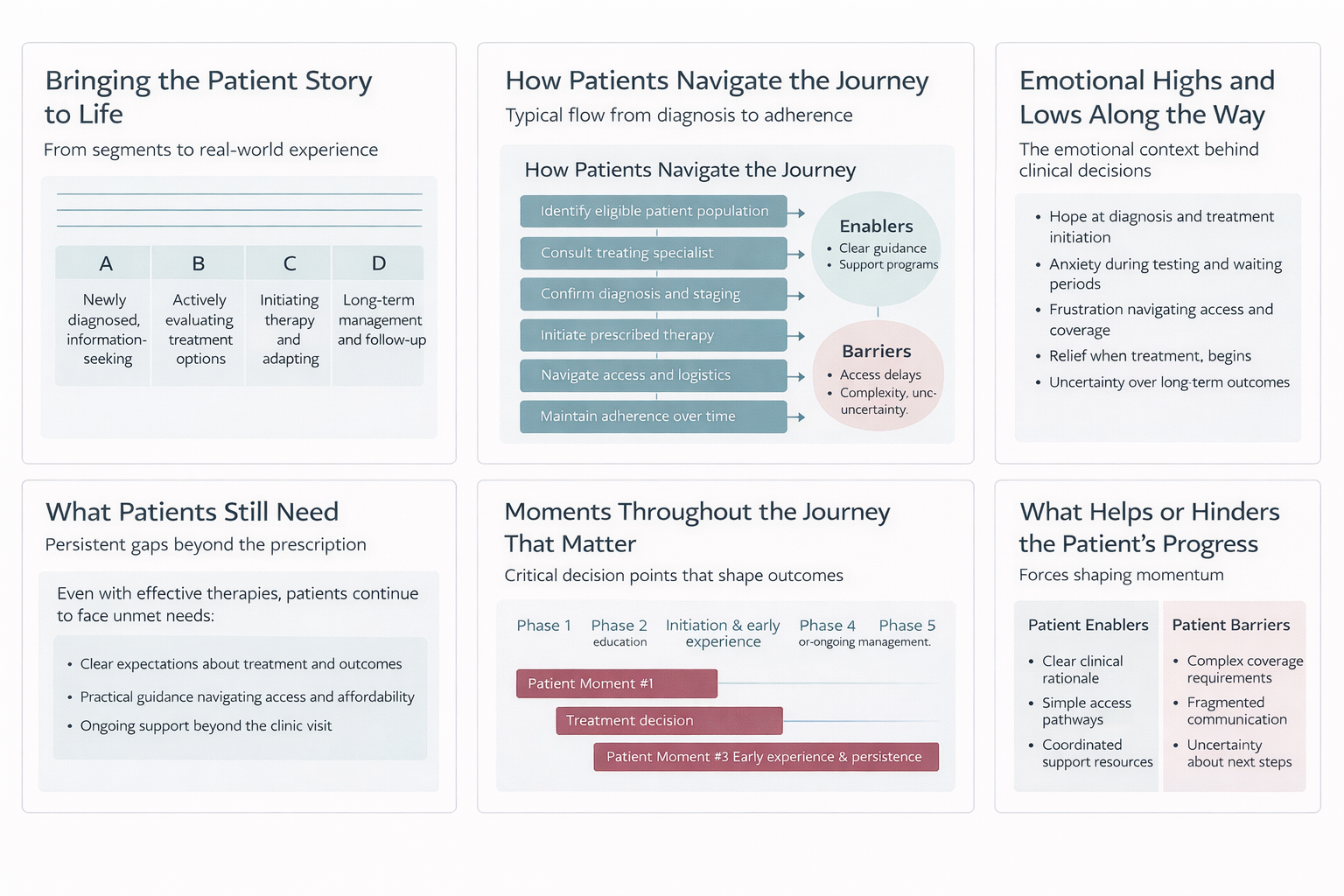
The Human Perspective Behind Every Therapy…
Every Arboris Path strategy begins with a simple but often overlooked truth:Behind every decision, trend, and data point is a real person.That’s why we start by deeply understanding the human experience — the motivations, fears, identities, and daily realities that shape how individuals navigate their care. These human factors are powerful, and when ignored, they quietly derail even the strongest strategies.Arboris goes beyond surface-level insights to uncover the emotional, behavioral, and experiential drivers that influence real-world choices.We explore what patients worry about at 2 a.m., what clinicians struggle to communicate during rushed visits, and what subtle frictions prevent people from taking the next best step. These insights reveal hidden barriers, unlock meaningful opportunities, and reshape the trajectory of care.By combining human truth with scientific evidence, Arboris ensures your strategy is not only analytically sound — but deeply resonant.The result is a more empathetic, credible, and effective approach that connects with stakeholders at every level and drives outcomes that matter clinically, emotionally, and commercially.
► “Your cancer has progressed. ”◄
► “The scan shows the tumor has grown.” ◄
► “The treatment isn’t working the way we hoped.” ◄
► “Your disease has returned.” ◄
► “We don’t have enough tissue to run all the biomarker tests.” ◄
► “Your blood counts are too low to continue treatment right now.” ◄
► “Your liver and kidney numbers are concerning.” ◄
► “You’re experiencing significant treatment-related side effects.” ◄
► “We need to delay or stop therapy for safety reasons.” ◄
► “This medication is no longer an option for you.” ◄
► “You’re not eligible for this clinical trial.” ◄
► “There are no additional standard treatments left.” ◄
► “The mutation we were hoping to find isn’t present.” ◄
► “Your insurance denied coverage for this treatment.” ◄
► “Your out-of-pocket costs will be higher than expected.” ◄
► “We need additional testing before we can move forward.” ◄
► “The biopsy results were inconclusive.” ◄
► “The side effects may outweigh the benefits at this point.” ◄
► “The cancer has spread to another area.” ◄
► “This treatment may affect your fertility.” ◄
► “We need to talk about quality of life.” ◄
► “You may need to be hospitalized.” ◄
► “We’re seeing signs that the disease is becoming resistant.” ◄
► “This is likely to be a long-term condition.” ◄
► “The risk of complications is significant.” ◄
► “We don’t have strong evidence this will help.” ◄
► “You may not tolerate another line of therapy.” ◄
► “Your symptoms suggest the disease is more aggressive.” ◄
► “We should discuss adding palliative care support.” ◄
► “We need to talk about next steps and goals.” ◄
► “Your cancer has progressed. ”◄ ► “The scan shows the tumor has grown.” ◄ ► “The treatment isn’t working the way we hoped.” ◄ ► “Your disease has returned.” ◄ ► “We don’t have enough tissue to run all the biomarker tests.” ◄ ► “Your blood counts are too low to continue treatment right now.” ◄ ► “Your liver and kidney numbers are concerning.” ◄ ► “You’re experiencing significant treatment-related side effects.” ◄ ► “We need to delay or stop therapy for safety reasons.” ◄ ► “This medication is no longer an option for you.” ◄ ► “You’re not eligible for this clinical trial.” ◄ ► “There are no additional standard treatments left.” ◄ ► “The mutation we were hoping to find isn’t present.” ◄ ► “Your insurance denied coverage for this treatment.” ◄ ► “Your out-of-pocket costs will be higher than expected.” ◄ ► “We need additional testing before we can move forward.” ◄ ► “The biopsy results were inconclusive.” ◄ ► “The side effects may outweigh the benefits at this point.” ◄ ► “The cancer has spread to another area.” ◄ ► “This treatment may affect your fertility.” ◄ ► “We need to talk about quality of life.” ◄ ► “You may need to be hospitalized.” ◄ ► “We’re seeing signs that the disease is becoming resistant.” ◄ ► “This is likely to be a long-term condition.” ◄ ► “The risk of complications is significant.” ◄ ► “We don’t have strong evidence this will help.” ◄ ► “You may not tolerate another line of therapy.” ◄ ► “Your symptoms suggest the disease is more aggressive.” ◄ ► “We should discuss adding palliative care support.” ◄ ► “We need to talk about next steps and goals.” ◄
The Patient Journey: Decision Points, Experience, and Momentum